A Guide to 11 Plus Interview Questions: Strategies for Success
Contents
Practising 10+ and 11+ Interview Questions at Home: Where to Begin
Common 11+ Interview Questions, How to Answer, and What Schools Are Really Assessing
Using the STAR Technique to Structure Clear and Confident 11+ Interview Answers
Additional 11+ Interview Questions to Build Confidence and Communication Skills
Quick Tips to Boost Your Child’s Confidence Before the 11+ Interview
11+ Interview Preparation with U2 Tuition: Expert 1 to 1 Support from Specialist Tutors
Preparing for the 11+ Interview: What to Expect and How to Help Your Child Prepare
Preparing for the 11+ interview can feel daunting for both students and parents. Independent schools use interviews to assess reasoning, curiosity, communication skills and potential, rather than memorised answers. This 11+ interview crib sheet provides practical tips, example questions, and expert guidance to help your child feel confident and prepared.
Naturally, schools are seeking intelligent students who can articulate their thoughts on a wide range of subjects. Alongside this, they also value confidence and effective communication skills. For most children at this age, this may be uncharted territory. This guide provides valuable tips to support your child.
Looking for personalised 11+ interview practice?
Our Oxbridge-educated tutors offer 1–1 mock interviews tailored to your target schools. Book a complimentary 20-minute consultation to learn more about our bespoke 11+ support.
Practising 10+ and 11+ Interview Questions at Home: Where to Begin
Schools seek students who demonstrate genuine interest, a willingness to engage in the wider school life, and a precise alignment with the school’s ethos. Applicants should be passionate about the opportunity to join the school. In preparing for the interview, the following points are crucial.
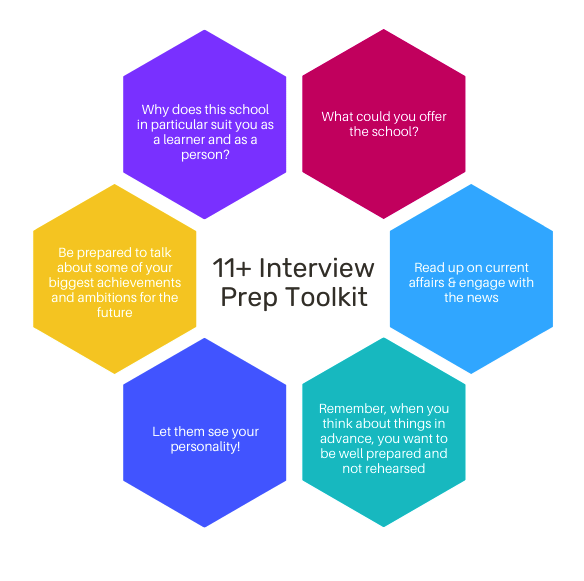
It's wise to think about answers to these questions with your child:
Why does this school align with your child's learning style and personal development?
What broader goals does your child hope to achieve through attending this school?
How can your child contribute to the school community?
Consider creating a chart like this example to connect your child's qualities with exciting aspects of the school:

Asking additional questions is a great way to demonstrate interest:
Your child should also be prepared to ask their own questions.
Research the school's website and note down 3 or 4 aspects that particularly appeal to your child, which they can reference or ask about during their 11+ interview.
These could relate to the school's ethos, sports programmes, drama offerings, other extracurricular activities, facilities, or anything else that piques their interest.
Crucially, any preparation should foster genuine enthusiasm, not rehearsed responses.
Encourage your child to reflect on why they are drawn to the school, and their genuine enthusiasm will shine through in their 11+ interview.
Learning a set script will only negatively impact their performance and could harm their chances of success.
Reading widely is another good habit to build at home:
Preparing for 11+ interviews requires not only providing good answers and specific knowledge about the school, but also presenting the best version of your child.
To achieve this, consider encouraging them to stay informed about current affairs, showcasing their engagement with the world around them.
This should be via accessible news outlets geared towards children, such as CBBC Newsround, The Week Junior, or First News.
Remember, honesty and enthusiasm can help your child make a positive impression during the interview. Schools are aware that they are very young and won’t expect them to know all the latest news stories by heart.
Want more tips? Learn more about U2 Tuition’s bespoke support for 11+ applicants here.
Common 11+ Interview Questions, How to Answer, and What Schools Are Really Assessing
Here are some common types of 11+ interview questions, along with tips on how to approach answering them.
What Sparks Your Greatest Excitement?
Schools are eager to welcome passionate and engaged students. In this case, there’s no one answer.
Teachers want to observe your child’s personality and learn a bit more about them.
It could be a passion like helping solve climate change, reducing poverty, or exploring outer space. Alternatively, it could be something enjoyable, such as a favourite meal or a special day. Any response is valid!
It's crucial to elaborate on the answer, explain the context to the interviewer, use vivid descriptions, and aim to evoke their excitement.
Encourage your child to use rich adjectives!
Should Homework be Banned?
With questions like this or other debates, such as ‘Is Keeping Animals in Zoos Right?’, schools want to see how your child thinks.
Encourage your child to consider both sides of the argument and provide their opinion.
In this case, your child should touch on the benefits and drawbacks of setting homework before coming to a conclusion.
Describe Your Favourite Book Character
Encourage your child to use descriptive language and synonyms to portray the character vividly.
A thesaurus can be a valuable tool. To practise, they could look up synonyms for words to describe character. For example, instead of ‘nice,’ they could consider using ‘charming,’ ‘lovable,’ ‘gentle,’ or ‘thoughtful.’
If it’s the main character in an action book, adventurous, daring, bold or headstrong come to mind.
Try to get your child to think about examples in the book where the character displays the qualities they admire them for.
They should aim to paint the picture for the interviewer so they can imagine the character, too.
This question could also be worded as a book, a film, an extra-curricular activity, a weekend plan, etc.
Using the STAR Technique to Structure Clear and Confident 11+ Interview Answers
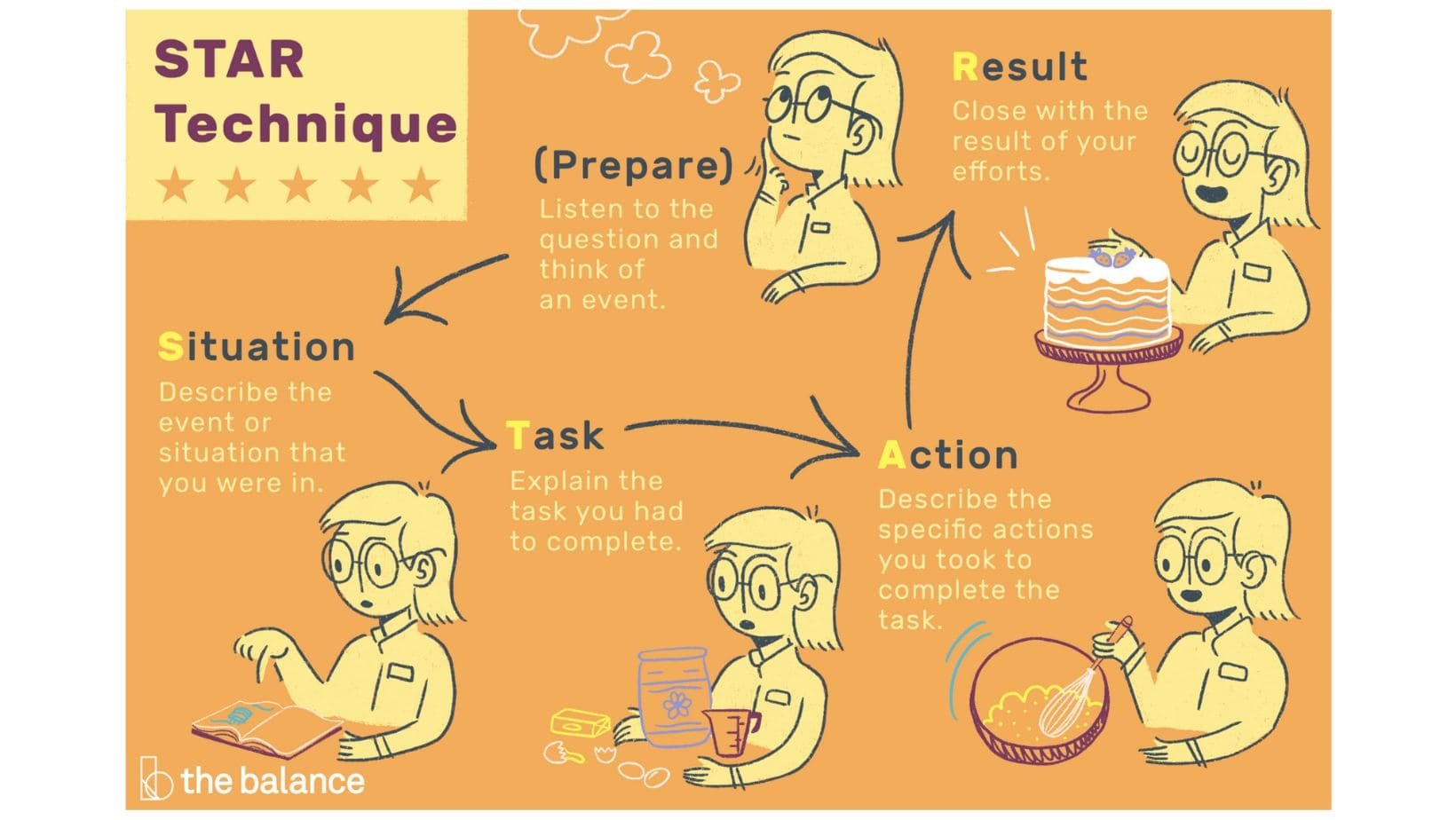
The STAR technique, an acronym for Situation, Task, Action, and Result, is a valuable strategy that can significantly aid students in answering 11+ interview questions effectively.
This method provides a structured approach to presenting their thoughts and experiences:
By first describing the Situation or context, students set the stage for their response.
Then, they outline the Task or challenge they faced, followed by a clear description of the Action they took to address the situation.
Finally, they conclude by detailing the Results or outcomes of their actions.
The STAR technique ensures that students provide comprehensive, well-organised responses, allowing interviewers to gain a deeper insight into their problem-solving abilities, communication skills, and personal growth.
Encouraging students to utilise this approach not only enhances their clarity but also helps them stand out during interviews, demonstrating their ability to think critically and articulate their experiences effectively.
The STAR principle in action: Tell Us About an Act of Courage.
Situation: It was the school assembly. The lead narrator was sick.
Task: They needed someone to step in at the last minute.
Action: I didn’t know all the lines and hadn’t narrated before, but I offered to help.
Response: I took the script with me on stage, but did most of it by heart, and the assembly was a great success!
Additional 11+ Interview Questions to Build Confidence and Communication Skills
Here are some other questions parents can use to help their children practise. They cover a wide range of topics and can help students prepare for 11 plus interviews by practising their communication and critical thinking skills.
What is your favourite subject in school, and why?
Can you tell me about a book you've recently read and enjoyed?
Describe a challenging problem you've faced and how you overcame it.
What qualities do you believe are essential in a good friend?
If you could travel anywhere in the world, where would you go and why?
If you could have dinner with any historical figure, who would it be and what questions would you ask them?
If you were allowed to change one school rule, what would it be and why?
What is the most critical environmental issue in the world today, in your opinion?
What do you think is the most significant technological advancement of the last decade?
Describe a time when you had to work as part of a team. What was your role, and what did you learn from the experience?
If you had the power to change one thing in the world, what would it be and why?
What would you do with £1 million?
If you could choose any superpower, what would it be, and how would you use it for good?
If you could design your own ideal school subject, what would it be, and what would it cover?
What is an achievement that you’re proud of?
Enhance your child’s preparation with a specialist 11+ tutor from U2 Tuition
Our Oxbridge-educated tutors have extensive experience with many of the top UK private schools and have supported numerous students through interviews to secure successful offers. There are numerous benefits to working with a tutor, allowing your child’s preparation to go far beyond what is typically possible when practising with a parent:
Mock interview practice
Detailed feedback
Targeted development strategies
Key skill sessions
Familiarity with the schools you're applying to
Sessions from £75/h + VAT.
Start your 11+ interview preparation today by booking a complimentary consultation with one of our experts.

Quick Tips to Boost Your Child’s Confidence Before the 11+ Interview
Encourage concise responses, ideally between 10 and 20 seconds in length. This not only prevents rambling but also fosters an image of confidence and reduces shyness.
Promote uniqueness in their answers. Encourage them to incorporate personal hobbies or favourite books into their responses to stand out.
Stress the importance of specificity. Instead of a simple "I play football," encourage detailed responses like "I love playing football; I was a part of my last school's team and helped them secure victory in the final."
Emphasise the enjoyment of answering interview questions. Remind your child to take 3-5 seconds to think about their answers and try to enjoy discussing the topics. Interviewers can detect genuine enthusiasm.
Ultimately, please encourage them to be themselves and to enjoy the interview experience!
If they’re feeling relaxed, they’re more likely to perform at their best! On this note, ensure they get a good night's sleep, arrive early, and stay calm.
By following the suggestions in this guide and utilising an 11+ interview tutor from U2 Tuition, your child will be well-prepared to confidently tackle any questions posed during the interview.
Best of luck!
11+ Interview Preparation with U2 Tuition: Expert 1 to 1 Support from Specialist Tutors

11+ Tutors
Our expert 11+ tutors, including alumni from leading UK independent schools, deliver 1–1 mock interviews, detailed feedback, and targeted strategies that build interview technique far more effectively than practising at home with a parent. Students gain confidence, develop effective communication skills, and become familiar with the expectations of top UK schools.
Alongside one–on–one interview preparation, many families also join our Minds Underground Junior Debate Club, where students develop public speaking, reasoning, and communication skills highly valued in 11+ interviews. It also enables students to stay up to date with current affairs, as debates tend to be topical and relevant to the present day.
Mock interview support is only one element of our 11+ support. We provide school choice guidance, exam preparation, extra-curricular development, and much more.
Book a complimentary 20-minute consultation, and we’ll match your child with a specialist 11+ tutor and discuss relevant co-curricular options.
Looking for more 11+ practice interview questions?
U2 Tuition’s Oxbridge-educated alumni from top UK schools, with specialisms in 10+ and 11+ entrance, have compiled a comprehensive 11+ interview question guide, which leads you through the typically asked questions.
Gain insight into the various interview formats, as well as more tips for further preparation.
Questions about the school
Answering situational questions
Current affairs questions
Extracurricular profile: interests and achievements
Mental Maths and Literacy questions
Personality test questions